
The Difference Between Services Procurement and Statement of Work (SOW) – and Why it Matters
Services are one of the fastest growing areas of organisational spend, yet the basic language around how they are bought and managed is often misunderstood. One of the most common points of confusion is the difference between services procurement and a Statement of Work (SOW).
They’re closely related, but they aren’t the same, and treating them as interchangeable can create misunderstanding, unnecessary risk and lost value.
What a Statement of Work (SOW) Actually Is
A Statement of Work is a contractual document that outlines the details of a single services project. It defines the scope of work, what needs to be delivered, the expected milestones, timelines, pricing and success measures. It acts as a project-specific roadmap, clarifying what the services supplier agrees to deliver.
Well written SOWs are key to help reduce misunderstandings, avoid scope creep, and ensure that both the organisation and service supplier agree on what success looks like for a specific engagement. It’s a contractual tool for project clarity, accountability, and alignment.
What Services Procurement Really Is
Services procurement is the discipline or process that governs how an organisation sources, scopes, contracts, manages and evaluates its external suppliers that deliver output-based services. Such as IT service providers, legal work, marketing agencies, business transformation and more.
It plays a critical role in an organisation’s ability to get work done and compete in the market. Services procurement is the strategic function that oversees how all external service providers are engaged and managed to fulfil business needs and goals.
The Confusion
The confusion happens because both deal with buying services, both involve suppliers, and both relate to delivering outcomes.
The difference is simple:
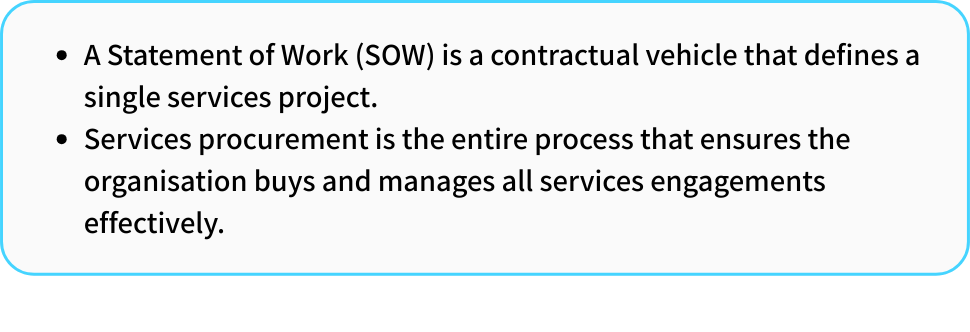
When the phrase Statement of Work is used to mistakenly describe the wider process or discipline of services procurement, this creates confusion and can lead to miscommunication, and the focus narrows to individual projects instead of the bigger picture. This leads to risks, overspend going unnoticed, and the strategic value of services getting lost.
Why It’s Important to Know the Difference
Understanding this distinction goes beyond terminology. It influences how effectively organisations control spend, manage suppliers and achieve the outcomes they expect.
A SOW can define the expectations of one project, but it can’t provide visibility across the wider category, supplier performance, or ensure consistency from one engagement to the next. Without the broader structure of services procurement, organisations lose the ability to compare suppliers, manage risk, identify value, or understand what their services spend is truly delivering.
Recognising the difference enables organisations to buy and manage services with clarity, structure and confidence.