

Want more services procurement insights?

Why Third-Party Services Are Becoming an Operational Blind Spot
How an organisation manages its supplier-delivered services says more about its operational discipline than almost any other category of spend.
When margins come under pressure, most efficiency programmes reach for familiar levers such as headcount and other category budgets. Third-party services spend rarely receives the same attention, despite being one of the largest costs many organisations carry and, in many cases, one of the least controlled.

You Approved It, But Can You Prove It? - The Hidden Liability Inside Third-Party Services
These were public bodies with established processes and resources, yet both still faced significant liabilities. For private organisations, the lesson goes beyond IR35. Third-party services are commissioned across multiple functions, suppliers and systems, while the decisions behind them can be spread across the business. When something goes wrong, having a process is not enough. You need to be able to show what was bought, why it was approved, how it was managed and what has changed since.

The Overrun That Wrecks the Forecast
By the time a third-party services overrun becomes visible, the opportunity to prevent it has often already passed.
Large supplier-delivered services engagements rarely exceed their budget because of a single decision. They drift over time as scope evolves, requirements change and delivery adapts. Individually, those changes often appear reasonable, but collectively, they can fundamentally alter the commercial profile of an engagement. By the time the full impact becomes apparent, the budget has already shifted, and the forecast has become increasingly difficult to recover.

Third-Party Services: Can You Really Say What You Got For It?
Most organisations can report, with a high degree of accuracy, what they spent on outsourced services last year. Far fewer can demonstrate, with the same confidence, what that investment actually delivered.
It's a question that sounds deceptively simple:
“For everything we spent on third-party services like consultancy, IT, engineering and business transformation, what did we actually get in return?”

The Silent Threat to Your Supply Chain: Unvetted External Access and Data Security
An outsourced supplier engagement comes to an end, the final invoice is paid, and the project is signed off. Yet months later, members of the supplier's delivery team may still have access to business systems, sensitive information or company facilities because that access was never formally removed. In many organisations, no one can say with confidence exactly how often this happens or how many former supplier personnel still retain access they no longer need.

Why Third-Party Services Require a Different Level of Visibility
Ask most businesses how many individual contractors they have working for them right now, and they can usually get an answer in minutes. Ask what the business is getting in return for the millions it spends on third-party services, whether projects are on track and whether they are delivering the outcomes they were paid to achieve, and the answer is often far less certain. That gap is where services spend can become a black hole, where organisations know what they are spending but struggle to see whether that investment is translating into business outcomes.
Grey Spend - The Messy Middle Between Services & Contingent Workforce
Grey spend - the messy middle where services procurement and contingent labour overlap, is where value quietly leaks through misclassified work, duplicated outsourcing, and runaway change requests. AI, requisition-stage data, and stronger cross-team partnering are making this spend possible to spot, quantify, and route the right way.
What Actually Determines Value in Services Procurement?
When an organisation buys goods, suppliers can generally be compared on specification, quality and price. Contingent labour follows a similar principle, where value is closely linked to the rate paid for an individual's time and materials. Services procurement operates differently. Two suppliers may submit proposals at almost identical prices yet deliver very different outcomes. The price captured within the Statement of Work (SOW) and ultimately reflected in the purchase order (PO), says little about the value the organisation will achieve.

The $3 Trillion Elephant in the Boardroom
One of the biggest levers leaders have on cost, risk and speed is also one of the least understood at board level.
Every executive team is judged on the same handful of things: protecting margin, controlling risk, and moving fast enough to stay ahead. One of the largest levers on all three sits in a part of the business that rarely reaches the boardroom is how an organisation buys, governs and manages the services it depends on.
The Future of Work Delivery & Services Procurement
Exploring how AI, workforce strategy, and evolving MSP models are reshaping the future of work. From services procurement and talent management to leadership and innovation, looking at how businesses can build smarter, more agile workforce solutions while keeping people at the center of transformation.
Why Services Procurement Isn't Just Contingent Labour at Scale
Many organisations view services procurement as an extension of contingent workforce management. It's an understandable assumption as both involve engaging external suppliers, bringing in specialist expertise, and managing non-employee spend, so it feels natural to reach for the same systems and the same playbook for each.
However, while the two disciplines may appear similar on the surface, they are solving fundamentally different problems for different work delivery channels. Treating one as a version of the other is where many processes run into difficulty.
Why Statement of Work (SOW) Is More Than Just a Contract Type
A Statement of Work (SOW) is often misunderstood as simply a contract document used to engage external services. In reality, an SOW is the contractual framework through which services procurement engagements are defined, managed and measured typically sitting beneath a Master Services Agreement (MSA) that governs the broader commercial relationship.
Why Services Procurement Belongs in Procurement, not HR
Services procurement and contingent workforce management are often discussed together because both involve external resources. However, they operate under fundamentally different models, with different stakeholders, governance structures, and objectives.
From Contingent Workforce to Strategic Services Procurement
The shift from contingent labor to total talent management is reshaping how organisations approach services procurement. AI, data, and stronger oversight are enabling better control, visibility, and value from complex services spend.
Understanding Where Risk Sits in Services Procurement
In services procurement, organisations are not buying capacity in the same way they do in contingent workforce programmes. They are buying outcomes, defined pieces of work delivered by external suppliers. That shift changes how risk is introduced, distributed, and managed.

Why Supplier Discovery Matters in Services Procurement
In many organisations, services procurement doesn’t begin with a process, it begins with a need.
A team identifies a problem, starts shaping a solution, and often has an idea of which suppliers to engage. By the time a Statement of Work (SOW) contract is created, key decisions like scope, delivery approach, and supplier choice, have often already been made.
The Upstream vs Downstream Problem in Services Procurement
Both stages contribute to value, but in different ways. Upstream determines what is being delivered, while downstream determines how that service delivery unfolds. If either is missing, the link between definition and delivery becomes less clear.
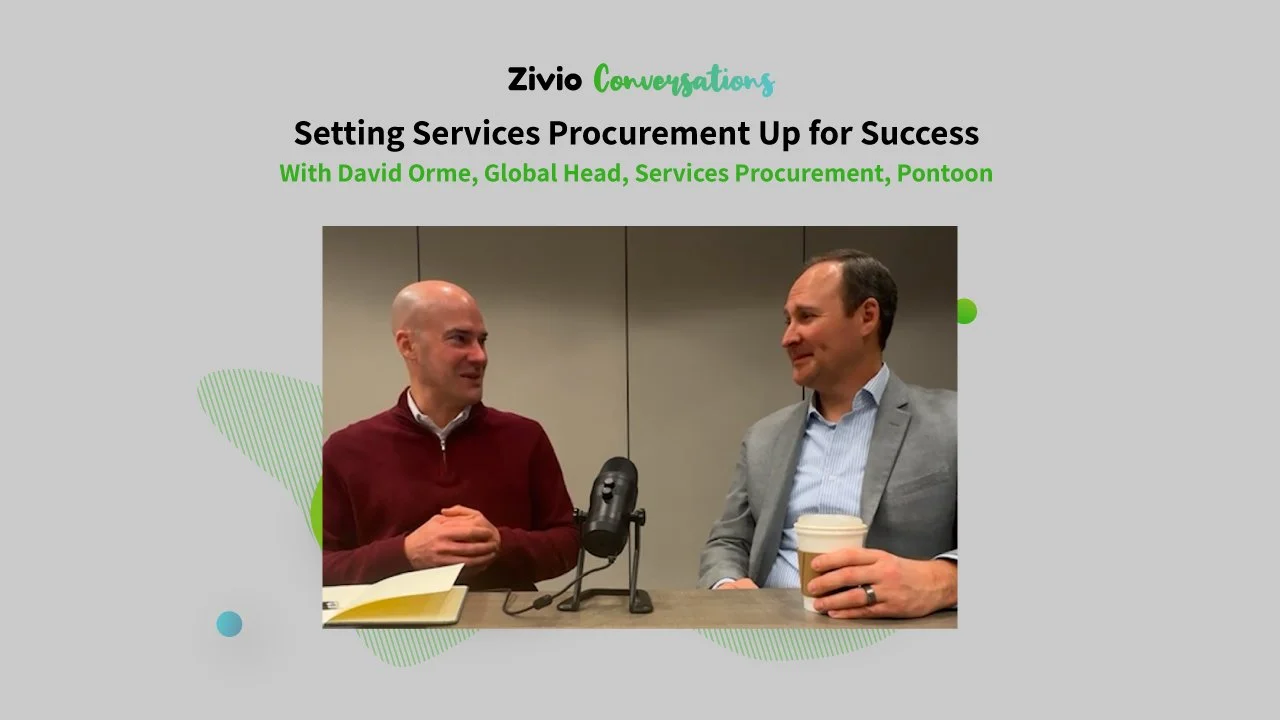
Setting Services Procurement Up for Success
When services are clearly defined upfront, organisations gain more control, better outcomes and stronger partnerships. This discussion examines what needs to change early to support scalable, effective services procurement.
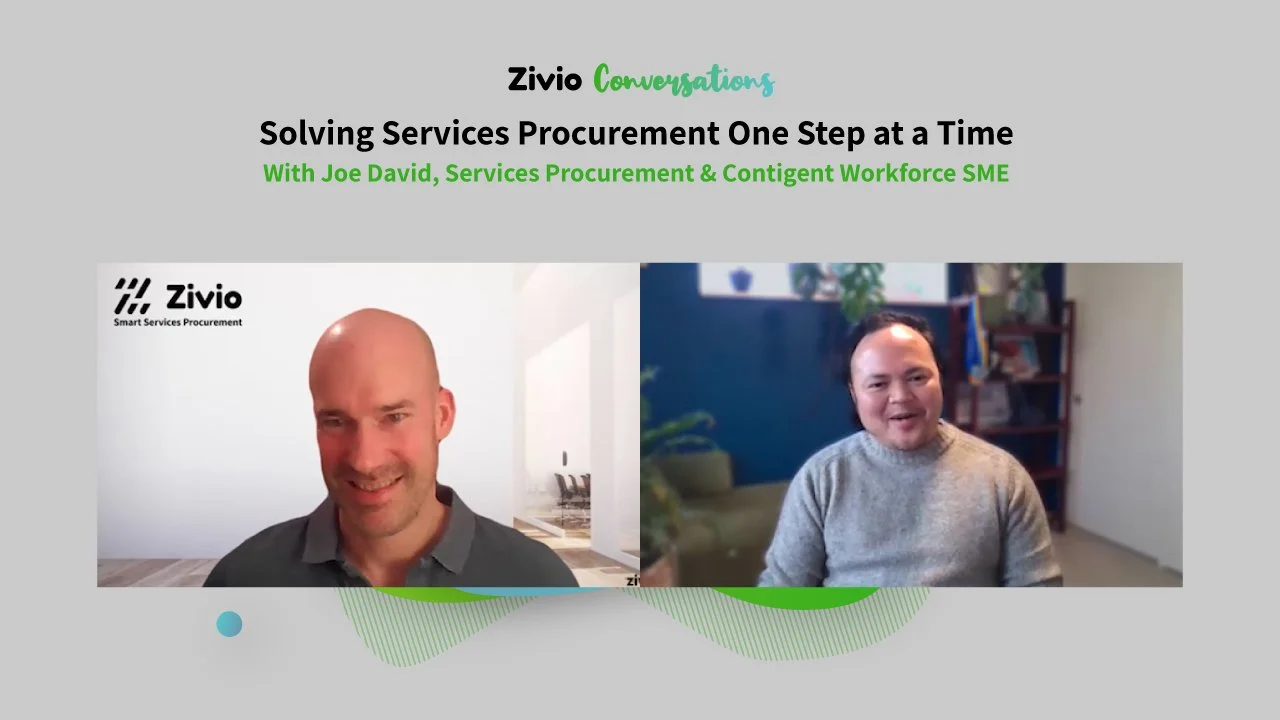
Solving Services Procurement One Step at a Time
Many organizations are still early in their services procurement maturity journey. This podcast explores how starting small and evolving over time can unlock value and build the foundation for more advanced supplier sourcing, analytics, and governance in services.

Capacity vs Outcome - Choosing the Right Work Delivery Channel
Whilst contingent workforce and services procurement may appear similar both involving external parties and sitting within the broader external spend ecosystem, they solve fundamentally different problems for different work delivery channels.