
Tracking Goods and Not Services - and Why That’s a Problem
Most procurement teams have no trouble tracking spend, suppliers, and timelines when it comes to physical goods like office supplies, laptops and industrial equipment. The journey is structured, visible and accounted for.
But, when it comes to outsourced services like consultants, agencies, or contractors, that same level of tracking often disappears.
Why? Because goods and services are fundamentally different. Yet many organisations try to track them the same way with generic tools and inefficient processes.
Goods vs Services: The Tracking Gap
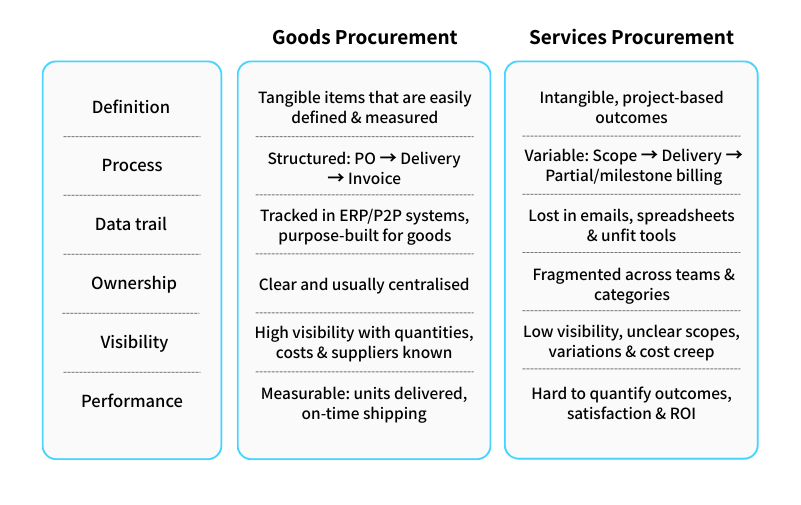
When services are tracked and treated the same way as goods, it creates a variety of gaps, where risk and cost increases, control and visibility weaken.
To identify these gaps, it’s important to understand the key differences between journeys.
Why Tools Built for Goods Don’t Work for Services
Existing procurement systems (ERP, P2P, S2P) are built for tracking physical items with fixed specs and prices.
They’re great for ordering goods but, are not adaptable to custom scopes or outcomes for services.
While Vendor Management Systems (VMS) work for tracking contingent labour, they fall short when it comes to milestone-based delivery or Statement of Work (SOW) projects.
Why This Matters
Without structured tracking, services procurement becomes a blind spot.
This leads to:
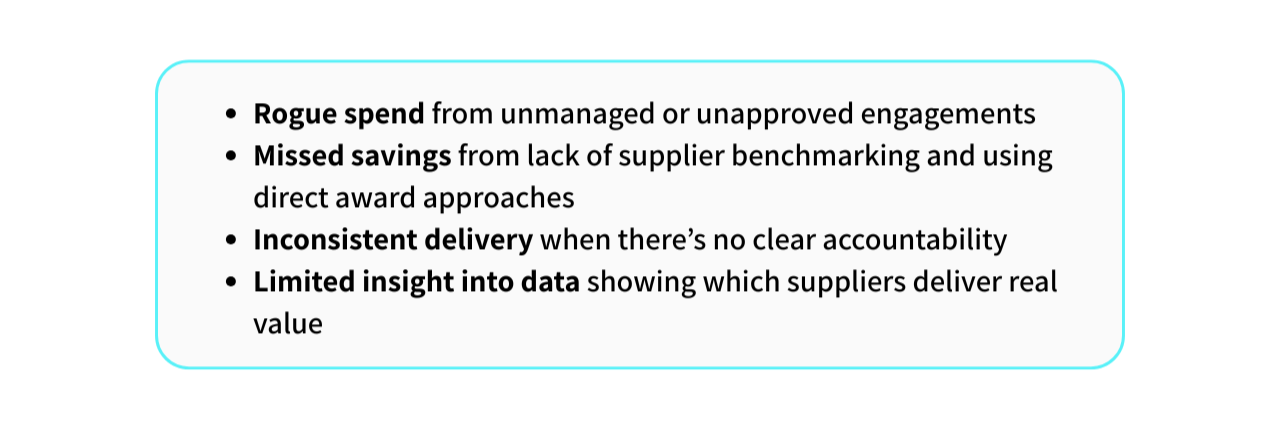
And while a mismanaged goods order might delay a shipment, a mismanaged service can derail a project or put strategy at risk.
It’s a pattern that’s occurring across the industry. In our latest Services Procurement Survey, rogue spend and missed savings came out as the most common challenge teams are facing today.
How It Gets Solved
The solution isn’t trying to force services into systems built for goods.
It means using a tool purpose-built for the complexity and unpredictability of services procurement.
Services Procurement Systems (SPS) are specifically made to handle the complex needs of services. It helps Procurement teams with:
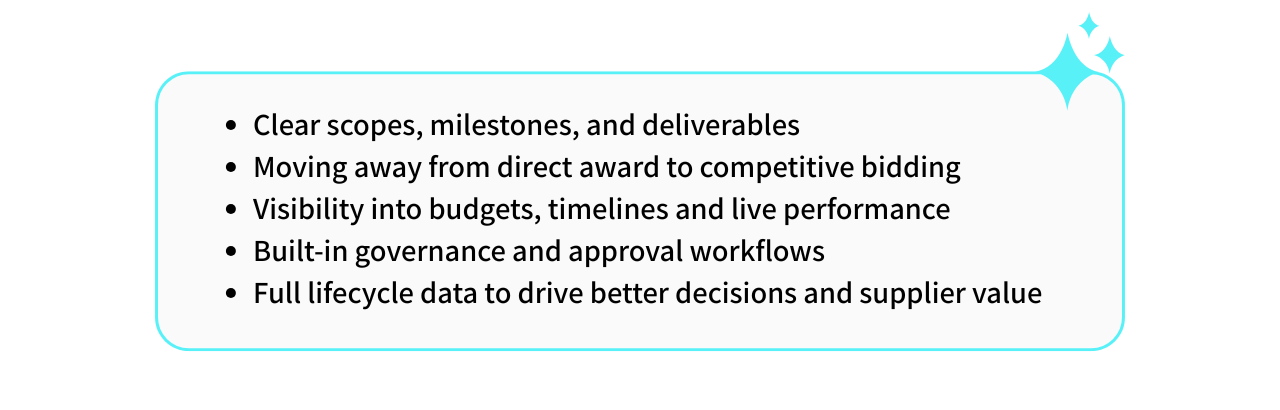
It brings the same structure and confidence you have with goods but, built for services.
If services are critical to your strategy, they deserve to be tracked with the same precision.